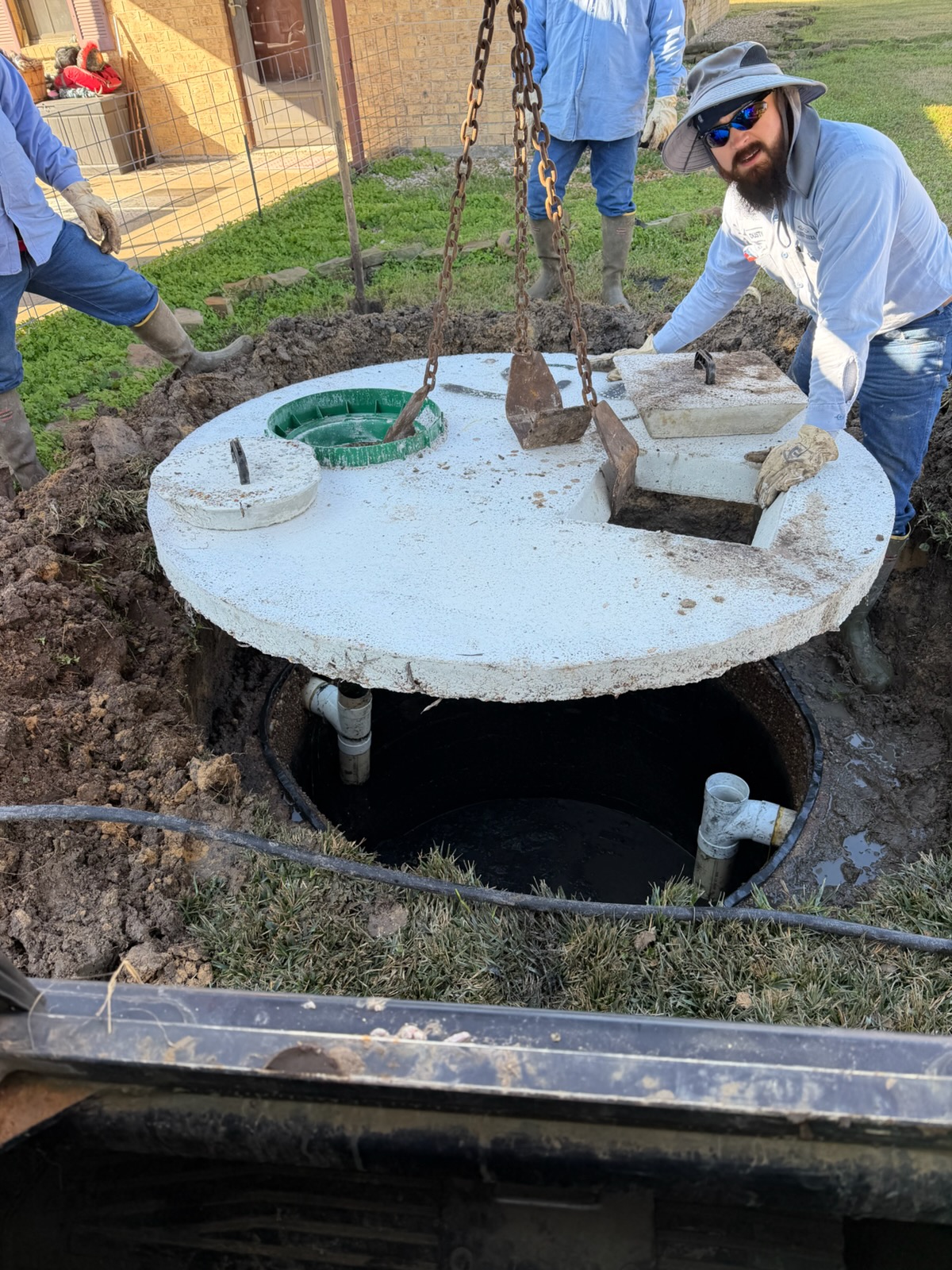
Aerobic septic systems in Dayton, TX
Aerobic septic systems, explained and serviced
An aerobic system treats wastewater with air and moving parts, so it needs a closer eye than a conventional tank. We work on aerobic systems for homeowners in Dayton, Liberty, Crosby and Baytown.
601 five-star Google reviews
“They did a great job servicing my aerobic septic system.”
“Adrian was absolutely awesome at explaining everything to us”
How an aerobic system works
An aerobic treatment unit cleans household wastewater in stages, and it adds air to the process. Oxygen-loving bacteria break down waste faster than they can in a sealed conventional tank, so the water leaving the system is treated further before it reaches your yard.
A conventional septic system relies on a tank and a drainfield, with no moving parts. An aerobic system adds an air supply and usually a pump, and it finishes with spray or drip dispersal. Those mechanical parts are the reason it should be looked at on a regular schedule.
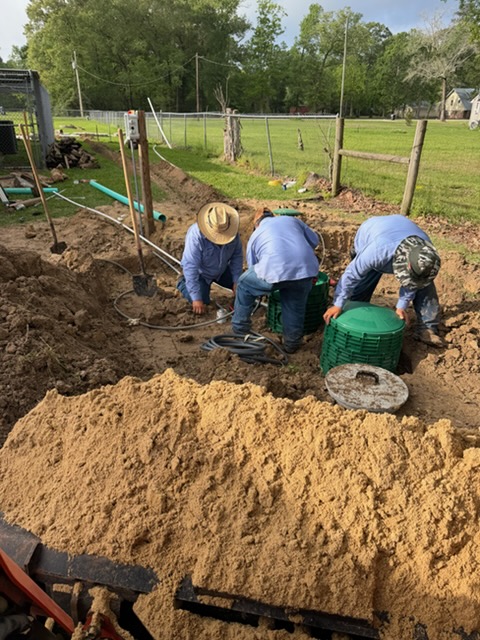
Parts of the system
Wastewater moves through these stages in order.
- Trash tank
- Wastewater enters here first. Solids settle out and are held back from the rest of the system.
- Aeration chamber
- Air is added so bacteria can break down what remains in the water.
- Clarifier
- The water settles again so the clearer liquid separates from what is left behind.
- Spray or drip dispersal
- Treated water is spread over the dispersal area by spray heads or drip lines.
Care and warning signs
Because an aerobic system has mechanical parts, small problems can grow if nobody checks them. Regular maintenance keeps the air supply, pump and dispersal working as they should and catches trouble early.
Signs of trouble
- An alarm sounding or a warning light on
- Odors near the tanks or the spray area
- Soggy ground or standing water in the yard
- Slow drains or backups inside the house
- No sound from the air supply that you normally hear
Do
- Keep your inspections on schedule
- Keep the system powered on at all times
- Know where the tanks, lids and spray heads are
- Call us when an alarm or odd sign appears
Don’t
- Drive or build over any part of the system
- Use swimming pool chlorine tablets in the disinfection unit
- Flush wipes, grease or other items that don’t break down
- Ignore an alarm and hope it clears
We work on aerobic systems
Brighteyes Septic handles aerobic systems from the first install through ongoing care.
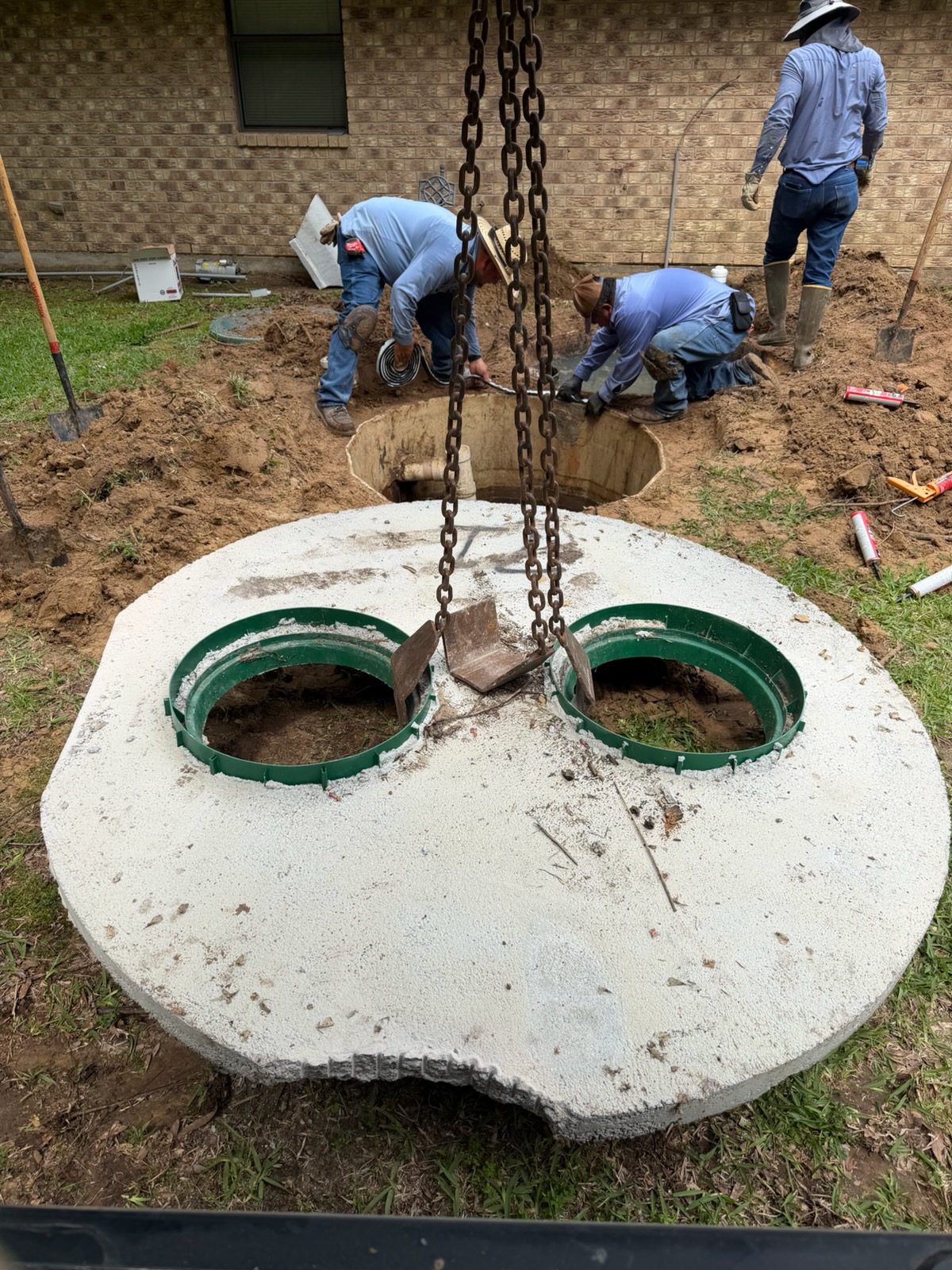
System Installation
Putting a new system in the ground.
Learn more
Servicing & Repairs
Diagnosing and fixing problems with your system.
Learn more
Septic System Maintenance
Keeping your system on a regular schedule. See also Maintenance Contracts.
Learn moreMaintenance Contracts keep inspections on schedule for your aerobic system.
Common questions
- How is an aerobic system different from a conventional one?
- It adds air and mechanical parts to treat the water more thoroughly, then disperses it by spray or drip. A conventional system has no moving parts.
- How often is an aerobic system inspected?
- Under a maintenance contract, an aerobic system is inspected at least once every four months.
- Does a new aerobic system come with service?
- Yes. A new system comes with an initial two-year service policy. After that, a maintenance contract keeps the inspections on schedule.
- Can I use pool chlorine tablets?
- No. Tablet chlorinators need calcium hypochlorite labeled for wastewater, not swimming pool tablets.
More answers are in our FAQ.
Questions about your aerobic system?
Call us or send a request and we’ll talk through what you’re seeing.